Random team maker · Activity roles
Random Team Maker: Rotate Roles Without Redrawing Teams
Use a random team maker to choose the members, then assign activity roles separately. For a four-person team, label the saved members A, B, C and D and rotate facilitator, recorder, timekeeper and reporter one place each round. Keep the same team list while roles change.
Give the group a task after the draw
A team list tells participants where to go. A role plan tells them what to do next. This page treats those as two separate decisions: first save the members, then agree who will guide the discussion, record decisions, watch time and present the result.
Random Team Split makes the groups and exports the member list. It does not assign roles or remember previous rounds. The sheet below is a manual plan you can use alongside the saved draw.
A four-round sheet for one saved team
We designed this plan for four members doing four rounds of the same activity. Copy the members from one saved team into slots A, B, C and D. For a synthetic example, A is Avery / R01, B is Blair / R02, C is Cameron / R03 and D is Devon / R04. The slot letters refer to members, not skill levels.
| Round | Facilitator | Recorder | Timekeeper | Reporter |
|---|---|---|---|---|
| 1 | A | B | C | D |
| 2 | D | A | B | C |
| 3 | C | D | A | B |
| 4 | B | C | D | A |
In round one, Avery facilitates, Blair records, Cameron keeps time and Devon reports. In round two, Devon facilitates, Avery records, Blair keeps time and Cameron reports. No one changes teams. The table changes the work assigned inside the group.
Check the pattern in two directions. Each row contains A, B, C and D exactly once, so one person has one role in each round. Each role column also contains A, B, C and D exactly once, so every member gets each role once across the four rounds. That is a check on this plan's coverage, not evidence that the work takes equal effort.
Download the four-round role sheet. It includes blank member slots, the rotation table and a handoff checklist. Fill the slots with your saved team before starting. Repeat the sheet separately for each four-person group; slot A in one team has no connection to slot A in another.
What changes at the end of a round?
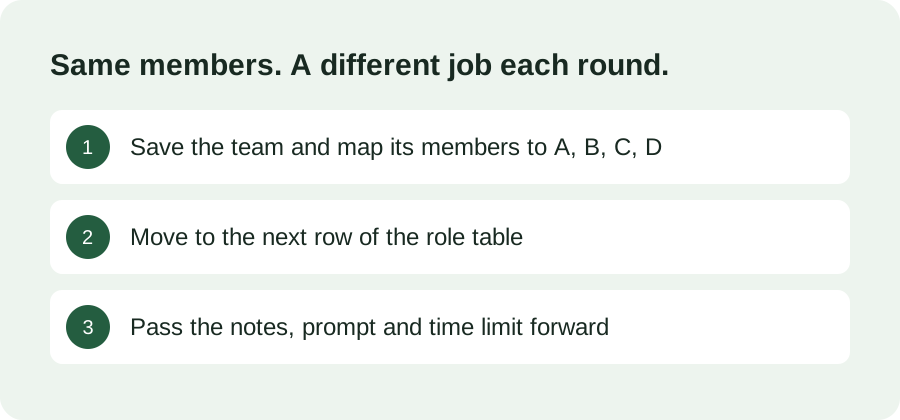
The outgoing recorder hands over the notes and marks any unfinished decision. The timekeeper confirms the next round's time limit. The incoming facilitator checks the next prompt. The next reporter identifies the result the group will share. These four handoffs are prompts built into our sheet, not automated actions in the generator.
Keep the member-to-slot mapping fixed for all four rounds. If Avery is A at the start, Avery remains A throughout the table. Renaming slots between rounds can defeat the coverage check even when the table itself looks correct. If someone leaves, pause and revise the plan instead of pretending the four-member rotation still applies.
Does rotating roles require another random draw?
No. Shuffle again changes teammates. For this plan, keep the chosen team list and move to the next row of the role table. If you want new partners, make that a separate activity decision and save the replacement draw.
What if a team has three or five people?
This table applies to four people. For three, you might combine timekeeping with facilitation after checking that the task allows it. For five, you might define an additional role such as materials coordinator. Agree on those duties and make a new rotation plan; the four-round table does not cover five distinct roles.
Will every participant contribute equally?
The sheet distributes named roles, not ability, effort or speaking time. Explain the task and allow adjustments for access needs. Use a group discussion record to keep decisions visible, and check the exported member list before handing out the role sheets.