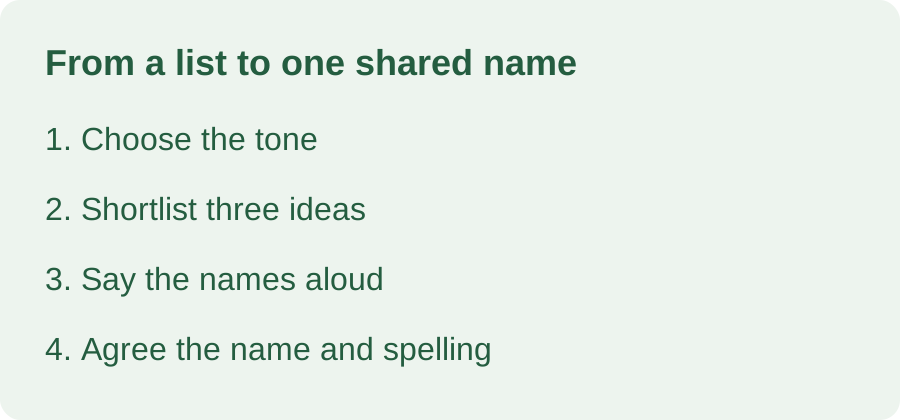
Pick a tone, shortlist three names and say them aloud. These 18 volleyball team name ideas cover calm focus, playful energy and bold imagery, each with a naming reason and a worked selection sheet.
Which tone fits your team?
A name belongs to the whole team. Decide whether you want a calm phrase, a joke or a strong image before voting. These names were written for this collection; they are not checked for existing use elsewhere, and they do not describe proven performance.
Quiet focus
For a team that wants a calm, coordinated name.
- Rally Lanterns
- Combines an extended exchange with a light everyone can follow.
- Court Compass
- Suggests a shared direction rather than a promise to win.
- Steady Arc
- Pairs a calm adjective with the path of a ball.
- Second Touch Society
- Builds the phrase around a touch and a collective identity.
- Net Notebook
- Uses an everyday object to give the name an observant tone.
- Even Tempo
- Names the rhythm you want to share, not a skill ranking.
Playful energy
For a social roster that wants a joke without targeting another team.
- Snack Break Spikers
- Pairs a familiar break with a volleyball-flavored group label.
- Oops, Still Up
- Turns a recoverable mishap into a short spoken phrase.
- Rally Ravioli
- Uses repeated opening sounds and a food word for a light tone.
- Net New Friends
- Makes the group identity social rather than combative.
- Court Confetti
- Suggests celebration through an object, without a victory claim.
- One More Bounce
- Uses an informal phrase; treat it as wordplay, not a rule description.
Bold imagery
For a name built around a picture you can describe in one sentence.
- Copper Current
- Combines a color/material image with motion.
- Rally Meteors
- Pairs the rally theme with a moving sky image.
- Netward North
- Creates a direction-themed phrase rather than borrowing a club name.
- Arc Assembly
- Connects a ball-path image with people coming together.
- Court Tides
- Uses a repeating movement image for the group.
- Signal Six
- Combines a shared cue with a number in the name; it is not an eligibility rule.
A worked shortlist, not a real team survey
For an invented social roster, we shortlisted Rally Lanterns, Snack Break Spikers and Copper Current. The brief was a welcoming name with a picture someone could sketch.
No teammates were surveyed. This is a constructed decision exercise.
Rally Lanterns fits the shared-light image and the calm tone. Snack Break Spikers fits the joking tone, but the group would need to want the snack reference on a shirt. Copper Current gives a color and motion image, but it says less about volleyball on its own. These are interpretations of our phrases, not measured audience preferences.
Under that brief, the example picks Rally Lanterns and keeps Copper Current as the backup. Change the brief and the choice may change. If the group wants a joke, Snack Break Spikers becomes the relevant candidate without needing a fake popularity score.
Download all 18 ideas and the blank shortlist sheet. The sheet has spaces for three candidates, tone, spoken wording, agreed spelling and the final decision. Keep the reasons beside the names; a list without reasons makes it harder to explain a choice.
Can you say the name without explaining it?
Read each finalist as if introducing your team. Can teammates recognize it without an explanation? Ask them to repeat the spelling you plan to submit. If a joke needs a paragraph, choose a shorter phrase or keep the joke for a private chat.
Check the final choice before using it
Search for the finalist and check your event’s naming requirements before submitting it. This collection does not establish that a phrase is unused or cleared for every use. Avoid implying you are an existing club or borrowing someone else’s roster identity.
Keep naming separate from assigning members
This page offers name ideas and a manual selection sheet. It does not generate team assignments or store your choice. If you also need to split people, use the random team generator; for two-person assignments, use the pair generator. Choose the people and the label as separate decisions.